

Back in May we saw some crazy weather with high winds and intense rains, which created several flooding events for us. With forecasters suggesting that this hurricane season will be a big one, we thought it was an opportune time to talk about the effects of flooding on mosquitoes.
The most obvious impact of flooding is standing water, which you know by now is our major source of mosquitoes. Compounding this issue for our customers is the movement of water from one yard to the next. This water carries mosquito eggs along and deposits a whole new population in your yard.
This water causes a population explosion that can be up to ten-fold of our typical population. Mosquito eggs are incredible. They can sit dormant in the soil for 10 years and hatch when added to water. They can stay frozen in ice for years and hatch when the ice thaws. Everywhere we walk, underfoot and in the soil, millions of mosquito eggs are lying in wait. When flooding hits, drenching the soil and causing puddles, and sometimes small ponds, all those eggs start hatching. It impacts the shorelines of creeks, hatching the eggs laid along its banks. It pulls water down off building sites into yards, it sends water (and eggs) downstream as the creeks fill and water floods south to the ocean.
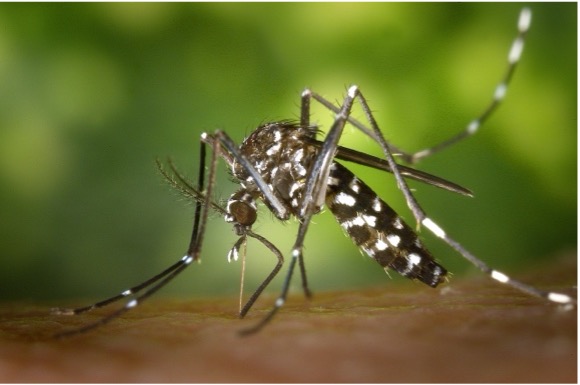
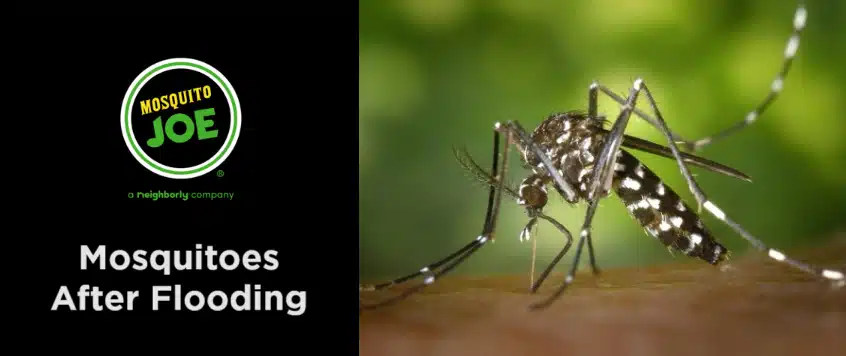
Aedes albopictus, or the Asian tiger mosquitoes, pictured here, are a very aggressive mosquito and the only one you will see out during daylight hours. They tend to feed (bite) in the afternoons. Asian Tigers are container breeders, loving old tires, pots and backyard junk as a place to make their home. After flooding all these items fill with water and suddenly their population explodes. These mosquitoes are much harder to control as they are good fliers and might be coming from something in your neighbor’s yard. Talk with your neighbors too! The less standing water in your neighborhood, the better!
Aedes vexans, more commonly known as the inland floodwater mosquito, also make an appearance after flooding. They hatch in masses almost simultaneously and can travel up to 15 miles to find food, making them one of the best fliers of all the mosquitoes. Estimates suggest that per acre there are between 0.7 and 1.3 MILLION eggs lying in wait for a flood.
Adding to this nightmare, are the biting midges in our grass. Their population will also explode after flooding. Biting midges look like a mosquito, but they are out all day and live in the ground and grass.
Here’s a cheat sheet with suggestions you can do to help expedite the decline in mosquito numbers after flooding:
Flooding brings huge mosquito issues, but if you stay on top of the water in your yard you can reduce your numbers dramatically. If you would rather, we do that for you just give us a call!


Searching through dozens of home and commercial service providers is a thing of the past. Rely on Neighborly’s national network of trusted, local service professionals for all your home and commercial service needs.
 App Store
 Google Play Store